

Party Hire Tips
Marquee Wind Limits for Safer Sydney Events
Sep
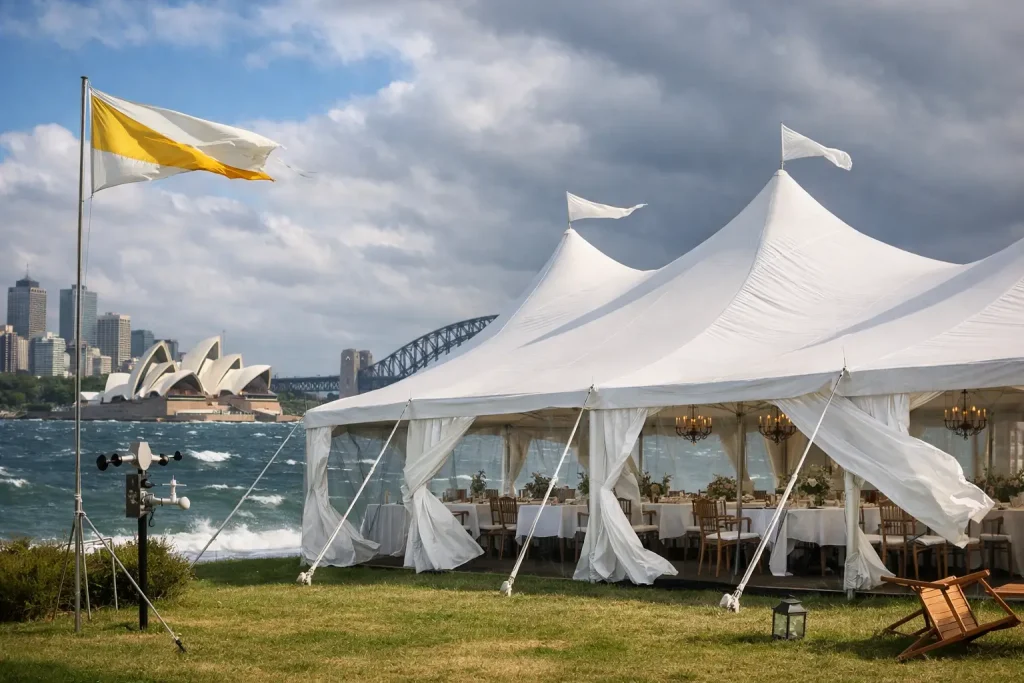
A beautiful marquee can turn a backyard, school oval or open event space into a proper celebration venue. But marquee wind limits need to be part of the planning from the first site conversation, not an afterthought when gusts arrive halfway through speeches or service.
For Sydney events, wind can change quickly with a cool change, storm front or exposed coastal location. The right marquee, correctly installed and supported by a sensible weather plan, gives you far more confidence to host your wedding, corporate function or family party in comfort. The key is understanding that safe wind performance is never just a number on a product page.
Why marquee wind limits are not one fixed number
It is tempting to ask, “How much wind can this marquee handle?” The honest answer is that it depends on the structure, its size, the site, the anchoring method and the configuration on the day. A small open-sided marquee on a sheltered lawn behaves very differently to a large structure with walls fitted on an exposed hardstand.
A marquee’s stated capability relates to the complete installation, not simply the frame. It assumes the correct components are used, all connections are secured, anchoring or ballast is installed as specified, and the structure is not altered once the crew leaves. It may also depend on whether the marquee is in use, being erected or being packed down. These are separate situations with different risks.
Wind is rarely steady. Gusts put sudden pressure on roofs, walls and entry points. Rain can soften grass and soil around pegs, while wet weather often arrives with the very wind that tests a marquee most. That is why an experienced hire team assesses the site and event setup before selecting the most suitable solution.
The site has as much to do with safety as the marquee
Before choosing a marquee size or style, look closely at where it will sit. A level, accessible lawn may allow secure ground anchoring, whereas concrete, pavers, asphalt or a rooftop can require weighted ballast and more detailed planning. Neither approach is automatically better. The appropriate choice comes down to the surface, available space and structural requirements.
Shelter matters too. Fences, neighbouring buildings and established trees may reduce everyday breezes, but they can also create unpredictable gusts. Open parkland, waterfront areas, hilltops and large car parks have fewer natural windbreaks. Even the direction of the marquee entrance can affect guest comfort when a strong breeze is pushing through the space.
For private homes, consider practical access as well as the final event area. The installation crew needs a safe path for equipment, and the selected anchoring method must suit the ground without damaging underground services. Let your hire provider know about irrigation, pipes, electrical cables, recently laid turf, pool surrounds and any restricted access before installation day.
What changes a marquee’s wind performance?
Several design choices affect how a marquee responds to weather. Larger spans present more roof area to the wind, while a higher structure can be more exposed than a lower-profile setup. This does not mean bigger marquees are unsuitable. It means they need the correct engineered system, fixing method and site assessment.
Walls deserve particular attention. They are excellent for warmth, privacy and rain protection, especially for evening weddings and winter functions. Yet a fully enclosed marquee can catch more wind than an open structure. Clear walls, solid walls and window walls should be selected as part of the overall weather plan, not added casually on the morning of the event.
The same thinking applies to accessories. Doors, flooring, lighting, heaters, hanging décor, signage and furniture placement all need to work with the marquee layout. A clear entry, properly managed cables and sensible placement of bars or buffet tables help the space remain practical if conditions change. Heavy items should never be treated as improvised anchors.
Start with the event brief, then build the weather plan
The most reliable marquee hire begins with a clear brief. Share the date, suburb, guest numbers, event timings and whether the function is seated, standing or a mix of both. A daytime birthday party has different requirements from a formal dinner that runs late into a cool, windy evening.
It also helps to identify what must remain protected. For some events, that is dining tables and linen. For others, it may be a dance floor, catering equipment, a stage, AV equipment or a children’s activity area. Once the priority areas are clear, the marquee can be sized and configured around how guests will actually use it.
A complete hire package often makes the weather plan easier to manage. Chairs and tables can be arranged to preserve clear walkways, flooring can improve comfort underfoot, and appropriate heating and lighting can make enclosed areas welcoming after sunset. Rather than coordinating separate suppliers, you can plan the core infrastructure and event essentials as one considered setup.
Ask the right questions before booking
A reputable provider should be comfortable discussing wind exposure and installation requirements in plain language. Ask whether the proposed marquee is suitable for your surface, how it will be secured, and whether ground anchoring or ballast is required. If you want walls, explain which sides you hope to enclose and why.
You should also ask about access, site preparation and the process if poor weather is forecast. The answer may vary by product and location, which is exactly as it should be. A provider who gives the same answer for every backyard, park and commercial site is not accounting for the real conditions.
For council land, schools, strata properties or commercial venues, there may be additional approval requirements. Venue managers can also have rules around pegs, vehicle access, loading zones, power and emergency exits. Allow time to confirm these details before sending invitations or finalising a floor plan.
On the day: keep the installation as designed
Once installed, a marquee should not be modified without approval from the hire team. Avoid removing walls, lifting sections of the roof, moving ballast or attaching banners, balloons, bunting and lighting to the frame unless they have been specifically allowed for. Decorations can look light but create extra surface area that catches wind.
Keep doors and entrances managed rather than leaving every opening exposed during gusty conditions. Make sure guests and suppliers know not to lean on the frame, hang belongings from it or use it as a support for equipment. This is especially worthwhile at busy celebrations where children, caterers and entertainers are moving around the space.
If the weather deteriorates, follow the instructions provided for your particular setup. A sensible plan may involve securing loose styling, closing approved walls or doors, pausing use of certain areas, moving guests indoors or changing the event schedule. Safety comes before preserving the original run sheet.
A practical bad-weather backup is good hosting
A weather backup does not take the excitement out of an outdoor event. It protects it. For a home celebration, that might mean retaining access to a garage, covered patio or indoor room for guests if severe conditions arrive. For a larger event, it may mean identifying a venue room, adjusting the ceremony layout or having a clear communication plan for suppliers.
Watch the forecast in the days leading up to your event, but do not rely on a single prediction. Conditions can shift quickly across Sydney, Bankstown and Hurstville. Keep mobiles charged, appoint one person to speak with suppliers, and make sure that person can make decisions if conditions require a change.
Marquee Event Hire has spent more than 25 years helping hosts create practical, polished event spaces. The best result comes from matching the marquee, furniture and weather protection to the actual site, rather than forcing a favourite layout into conditions that do not suit it.
Plan for comfort, but decide for safety
A marquee should give guests somewhere to celebrate, dine and relax, not create another concern for the host. Be open about your site and expectations, choose a configuration designed for its conditions, and leave installation changes to the professionals. With the right preparation, you can focus on the welcome, the food and the moments your guests will remember – whatever the forecast has in store.