
Party Hire Tips
Marquee Walls vs Open Sides for Sydney Events
Oct
A marquee can completely change the feel of an outdoor event, but the roof is only part of the decision. When comparing marquee walls vs open sides, the right choice comes down to more than looks. It affects guest comfort, weather protection, views, noise, access and how well the event runs from first arrival to final farewell.
For a Sydney wedding on a picturesque private property, open sides may make the most of the garden or harbour breeze. For a corporate dinner during a cooler month, marquee walls can create a polished, protected room that feels far more intentional. The best setup is often not fully open or fully enclosed, but designed around the site, season and occasion.
Marquee Walls vs Open Sides: The Key Difference
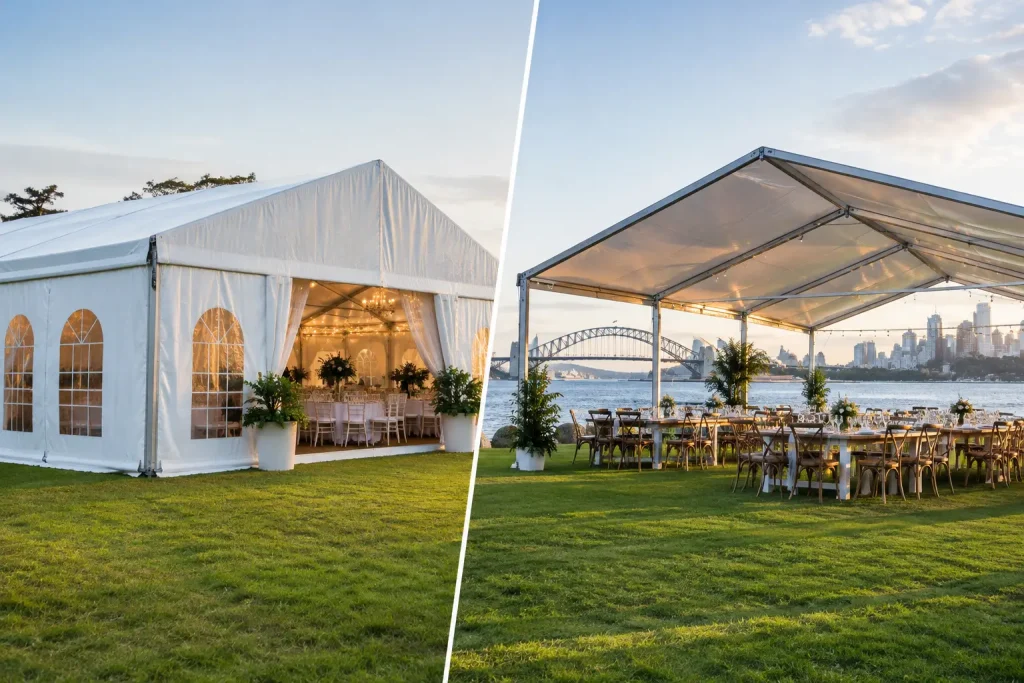
An open-sided marquee provides overhead shelter while keeping the perimeter clear. Guests can move easily between the marquee and surrounding lawn, courtyard or venue, and the event remains connected to its setting. This style is popular for daytime celebrations, casual parties and events with attractive outdoor views.
A walled marquee uses sidewalls around some or all of the structure. Walls can be solid, clear or windowed depending on the desired look and conditions. They help define the event space and offer greater control over wind, rain, temperature and privacy.
Neither option is automatically better. A beautiful sunny afternoon can suit an open arrangement perfectly, while the same setup may leave guests uncomfortable if a southerly wind arrives just as dinner is served. Thinking through how the event will feel across the full hire period makes the decision much easier.
When Open Marquee Sides Make Sense
Open sides are ideal when the surroundings deserve to be part of the celebration. A backyard birthday, garden wedding ceremony, school fete or relaxed cocktail party can benefit from the easy-going atmosphere they create. Natural light reaches the tables, the space feels larger, and guests are not separated from the view.
They also work well where guest flow is a priority. If people will be moving between a bar, food station, dance floor, lawn games and seating area, an open perimeter prevents bottlenecks. It is particularly useful for family events where children need room to move between the marquee and a jumping castle or activity area.
On a warm day, open sides can improve ventilation and keep the space from feeling stuffy. This is valuable for busy celebrations with dancing, catering equipment and a full guest list. However, ventilation is only pleasant while the weather remains calm. Strong winds can lift napkins, blow table linen around and make seated guests feel chilly, even when the temperature looks reasonable on paper.
Open sides require more consideration around the details. Choose sturdy furniture, secure decorative items properly and position food service away from direct wind. If the event extends into the evening, heating, lighting and a backup wall plan may be needed to keep the atmosphere welcoming.
Why Marquee Walls Are Worth Considering
Marquee walls give organisers greater certainty. They provide a barrier against wind, showers and cooler evening air, helping guests settle in rather than continually reach for jackets or move tables away from the weather. For weddings, corporate functions and formal dinners, that comfort can make a noticeable difference to the experience.
Walls also create a clearer sense of arrival. Once guests step inside, the marquee becomes a dedicated event room rather than a covered patch of lawn. This can elevate the presentation of a celebration, especially when paired with a dance floor, linen-covered tables, feature lighting, bar furniture and carefully chosen styling.
Privacy is another practical advantage. A walled setup can screen neighbouring properties, car parks, service areas or busy public spaces. For a branded corporate event, it also gives signage and displays a more controlled backdrop. For private celebrations, it can simply help guests relax and enjoy the occasion without feeling on show.
A fully enclosed marquee is often the strongest choice for autumn and winter events, evening receptions and sites exposed to wind. Add suitable heating and the interior can remain comfortable long after sunset. Clear or windowed walls are especially useful when you want protection without losing the garden outlook or city lights.
There is a trade-off. Enclosing every side can reduce airflow on a warm day and make an event feel more formal than intended. It can also change the way sound behaves, with music and conversation carrying differently inside an enclosed space. This is not a reason to avoid walls – it is a reason to plan ventilation, entrances and entertainment placement properly.
A Flexible Setup Often Delivers the Best Result
Many successful events use a combination of walls and open sides. You might keep the main guest-facing side open to a garden, install clear walls on the weather-exposed side, and use solid walls behind catering or the bar. This preserves the view while protecting the parts of the event that need it most.
For example, a wedding reception may have one open side facing the ceremony lawn, clear walls along the sunset side and solid rear walls behind the catering area. A birthday party could use walls on two sides for privacy, leaving the front open for easy access to the backyard. For a corporate function, sidewalls can define the dining area while a wide opening directs guests towards an outdoor networking space.
This approach also gives you options if the forecast changes. Rather than treating walls as an afterthought, include them in the initial layout discussion. It is far easier to plan positions, entrances and furnishings before delivery than to rethink the room once guests are due to arrive.
Match the Sides to Your Event Style
The formality of the event should influence the decision. Open sides naturally suit relaxed, social occasions where guests are expected to circulate. Think long lunches, engagement parties, community gatherings and daytime celebrations. They let the setting do much of the decorating.
Walls suit occasions where comfort, presentation and timing matter more closely. A seated wedding meal, awards night, product launch or winter birthday dinner benefits from the room-like finish and protection. That said, clear walls can soften the formality and keep the event connected to the outdoors.
Consider your furniture and hire choices too. Lounge seating, ottomans and wine barrels work beautifully in an open cocktail setting, particularly when positioned on a dry, level surface. Dining tables, chair covers, table linen and carefully styled centrepieces are easier to protect in a more enclosed space. A dance floor should be located away from the most exposed opening, as wind and sudden rain do not pause for the playlist.
Check the Site Before Making the Call
Weather is only one part of the equation. A site inspection or a detailed conversation about the location can reveal factors that are easy to miss when planning from photos. Look at the direction of prevailing wind, afternoon sun, ground conditions, nearby trees, neighbouring properties and the distance between the marquee and amenities.
If the event is at home, consider access through gates, along paths and around gardens. If it is at a venue or public space, check whether there are restrictions on pegging, vehicle access, noise or placement. Walls may be useful where a marquee sits close to a driveway, footpath or less attractive part of the property.
For Sydney events, it is sensible to plan for changing conditions even in warmer months. A bright morning can become windy by late afternoon, and a warm day can cool quickly once the sun drops. Sidewalls, heaters and well-positioned lighting are practical inclusions, not signs that you are expecting bad weather.
Keep Guests Comfortable From Day to Night
The most reliable choice is the one that supports the actual event schedule. Ask when guests will arrive, where they will eat, how long they will stay and what happens after dark. A lunch ending at 3 pm has different requirements from a reception that runs until 11 pm.
If the event includes speeches, think about wind and background noise. If catering will be set up nearby, protect food preparation and service from the elements. If children are attending, make sure the layout allows supervision without creating awkward barriers. If guests are dressed for a formal occasion, give them a space where they can stay comfortable without coats over evening wear.
Marquee Event Hire has spent more than 25 years helping Sydney hosts build event spaces around these real-world details. The marquee, walls, furniture, heating, lighting and finishing touches work best when they are planned as one complete setup rather than hired in isolation.
Choose open sides when the setting, sunshine and free movement are central to the occasion. Choose walls when weather protection, privacy and a defined event room matter most. If your celebration needs both, a tailored mix gives you the confidence to enjoy the day while your guests enjoy every corner of it.