

Party Hire Tips
How to Rent Wedding Lighting Without Guesswork
Oct
A wedding can have beautiful flowers, considered table settings and a spectacular marquee, yet still feel flat once the sun goes down. Lighting is what gives the space warmth, depth and atmosphere. Knowing how to rent wedding lighting means choosing equipment that looks right in photos, helps guests move around safely and supports every moment of the celebration, from arrival drinks through to the last song.
For Sydney weddings, lighting also needs to work with the setting. A waterfront venue, backyard reception, rustic hall and clear-span marquee all call for different approaches. The best hire package is not necessarily the biggest one. It is the one that suits your layout, your run sheet and the feeling you want guests to take away.
Start with the feeling you want to create
Before choosing individual fittings, describe the reception in a few words. Soft and romantic, polished and formal, relaxed garden party or high-energy dance floor are all useful starting points. This helps narrow the choices quickly and stops you hiring lights simply because they looked impressive at another wedding.
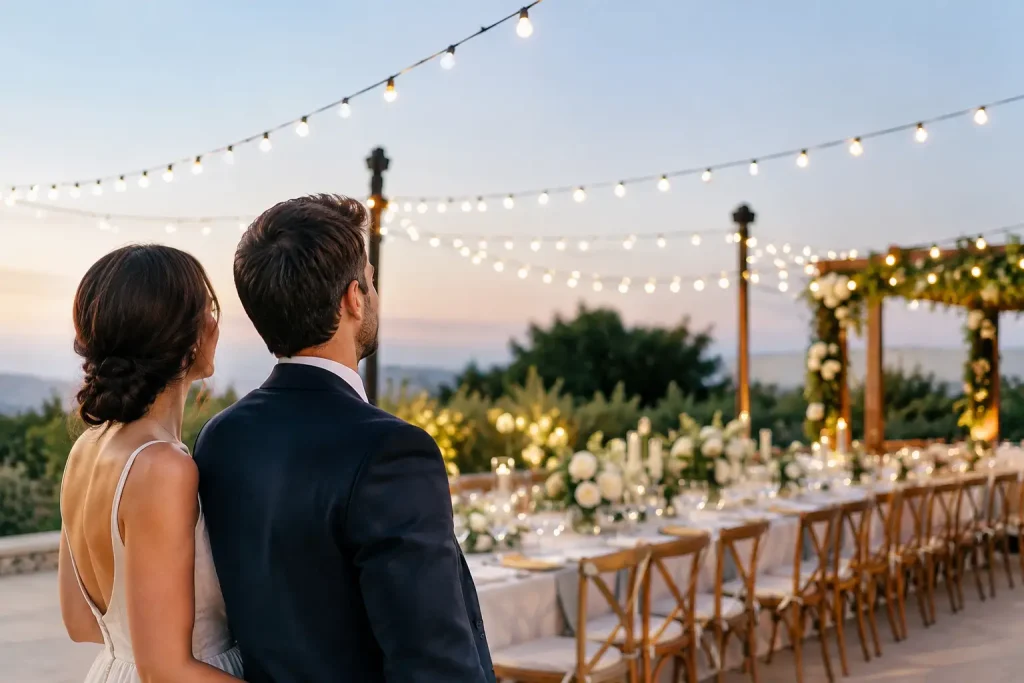
Warm white fairy lights are often a natural fit for intimate dinners, garden weddings and marquee ceilings. Festoon lighting gives a more sociable, celebratory look and can define outdoor dining areas, courtyards and pathways. Uplights add colour and drama to walls, trees, draping or marquee linings, while disco and party lights come into their own after dinner when the dance floor opens.
Think about how the mood should change across the night. You may want soft, flattering light around tables during speeches, then brighter movement and colour near the dance floor later on. Hiring separate lighting for these zones gives you more control than trying to make one fixture do every job.
Map the wedding before you rent lighting
A simple site plan is one of the most useful tools for organising your hire. It does not need to be technical. Mark where guests enter, where they will eat, the bar, dance floor, cake table, toilets, catering area and any outdoor paths. Then look at each area after dark and ask what guests need to see and what deserves to be highlighted.
Prioritise safety and function first
Paths, stairs, changes in level and entrances need enough practical light for guests, suppliers and family members to move confidently. This is particularly relevant for home weddings and temporary venues where the layout changes for one night. Festoon strings, garden lighting and carefully placed flood lighting can make these areas safer without making them feel clinical.
The bar, catering stations and service access also need clear visibility. A beautifully lit dining area will not help much if staff cannot safely carry plates, replenish drinks or pack down equipment. Discuss operational spaces with your venue or caterer early, especially if the celebration runs late.
Light the moments people will photograph
Your ceremony backdrop, signing table, cake and head table are likely to appear in many photos. They deserve deliberate lighting rather than relying on whatever happens to be nearby. A small number of well-positioned lights can make flowers, styling and faces look far better than a bright light pointed directly at the scene.
Avoid placing harsh fixtures at eye level or aiming lights straight towards guests. The goal is a welcoming glow, not squinting through speeches. If you are unsure, ask your photographer where the key photo angles will be and plan around them.
Choose lighting that suits your venue or marquee
The structure above and around your guests will influence what can be installed. In a marquee, lighting can be suspended from the frame, layered through the roof lining or used to create an inviting entrance. A clear roof may need additional ambient light once daylight fades, while a silk-lined marquee can look especially warm with fairy lights threaded through the interior.
For outdoor weddings, consider how far the lighting needs to travel and what it can safely attach to. Mature trees, fences and existing structures may offer options, but never assume they are suitable without checking. Some locations have restrictions on attachments, cables, generators and end-of-night noise, so confirm venue rules before finalising your order.
Indoor venues can be simpler, but existing fittings do not always match the wedding style. Battery uplights may be useful where cable runs would be visible or awkward. For heritage buildings and smaller spaces, restrained lighting often looks more elegant than filling every corner with effects.
Understand power, cables and weather
Lighting hire is not just about the fixtures. Every item needs an appropriate power source, safe cabling and enough capacity to operate alongside catering equipment, heating, sound systems and other event essentials. A marquee wedding, for example, may require a broader power plan than a reception at an established venue.
Provide your hire team with the venue address, event date, bump-in access, approximate guest numbers and a copy of the site plan if you have one. Let them know what else will be drawing power, including band equipment, food vans, cool rooms, heaters and DJ gear. This information helps determine whether existing power is suitable or whether a generator and distribution equipment should be considered.
Cables should be routed away from busy guest areas where possible. Where they must cross a walkway, they need proper protection to reduce trip hazards. Outdoor equipment must also be appropriate for the conditions. Sydney weather can turn quickly, so ask what the wet-weather plan looks like and make sure temporary lighting is not left exposed to rain.
Build your lighting package in layers
The most successful wedding lighting is usually layered. Rather than relying on one strong source, combine a few different types of light so the space feels complete. Start with ambient lighting for the overall room or marquee, then add task lighting where people need to see clearly and decorative lighting for personality.
A practical package might include fairy lights across the marquee ceiling, festoon lighting at the entrance and outdoor lounge area, subtle uplights behind the bridal table, plus dedicated dance floor lighting. The exact mix depends on your venue and budget, but this approach makes it easier to remove or add elements without compromising the whole setup.
If your budget is tight, spend first on entrances, dining areas and safe access. These are the spaces every guest uses. Decorative effects for the dance floor can be added if the budget allows, but a dark walkway or poorly lit dinner setup is harder to overlook.
Confirm timing, installation and pack-down
Lighting is most effective when it is installed before other styling starts. It may need to be attached to a marquee frame, positioned around furniture or tested before floral arrangements and table settings go in. Share your supplier schedule so the lighting team can work around marquee installation, furniture delivery, styling and catering bump-in.
Ask who is responsible for installation, testing and pack-down, and whether the hire price is per day or includes a specific event period. If you have hired equipment for a multi-day setup, clarify when it will arrive and when it needs to be ready for collection. This avoids late changes when suppliers are already on site.
It is also worth nominating one person, such as your coordinator, venue manager or trusted family member, to understand how the lights switch on and off. They should know which controls relate to dining, outdoor areas and the dance floor, particularly if the atmosphere changes throughout the reception.
Questions to ask before confirming your order
A lighting hire quote should be clear enough that you know exactly what is included. Before booking, confirm whether installation and removal are included, what power is required, how much cable is supplied and whether cable covers are needed. Ask whether items are suitable for outdoor use and what happens if wet weather affects the setup.
You should also ask about access constraints. Narrow gates, stairs, limited parking, venue curfews and restricted loading areas can affect both delivery and installation. For a marquee wedding, it is helpful to organise lighting alongside the structure, furniture and dance floor where possible. One coordinated plan reduces the risk of a cable route, light fitting or ceiling feature being overlooked.
With more than 25 years of event experience, Marquee Event Hire can help couples organise lighting as part of a broader marquee and reception setup, rather than treating it as a last-minute extra.
Give yourself time to see the venue after dark
If possible, visit the site around the same time your reception will move into the evening. Daytime inspections can hide dark corners, uneven paths and the way a large open space changes once natural light disappears. Take a few photos from guest height, not just wide shots, and use them to guide your decisions.
The right wedding lighting does more than decorate a room. It helps guests feel welcomed, keeps the celebration running safely and makes the spaces you have carefully planned feel special long after sunset.