

Party Hire Tips
12 Event Lighting Ideas That Set the Mood
Oct
The difference between a functional event space and one guests photograph all night often comes down to lighting. The best event lighting ideas do more than make a marquee, hall or backyard visible after dark. They guide guests, flatter faces, define key areas and give the whole occasion a considered sense of occasion.
For Sydney events, lighting also needs to work with the setting. A summer garden party may need a gentle glow once the sun drops, while a winter corporate dinner needs warmth from the moment guests arrive. Start with the practical requirements, then layer in the atmosphere.
Event lighting ideas start with the event layout
Before choosing fairy lights or statement features, map the spaces people will actually use. Entry points, paths, food service areas, bars, toilets, stairs and parking access all need enough light for safe movement. This is the foundation layer, and it should never be treated as an afterthought.
Next, consider the focal points. At a wedding, that may be the ceremony space, bridal table, cake and dance floor. For a corporate function, it could be the registration desk, stage, branded backdrop and bar. A birthday party may centre on the cake table and dance area. Lighting these zones deliberately helps the event feel organised without covering every surface in the same treatment.
In a marquee, the roofline creates a natural canvas. The size, ceiling height and wall configuration influence how lighting will look, so it is worth planning marquee and lighting selections together. A low, intimate structure can feel inviting with warm festoon or fairy lighting, while a larger clear-span marquee may suit bolder overhead installations and uplighting.
1. Create warmth with overhead festoon lights
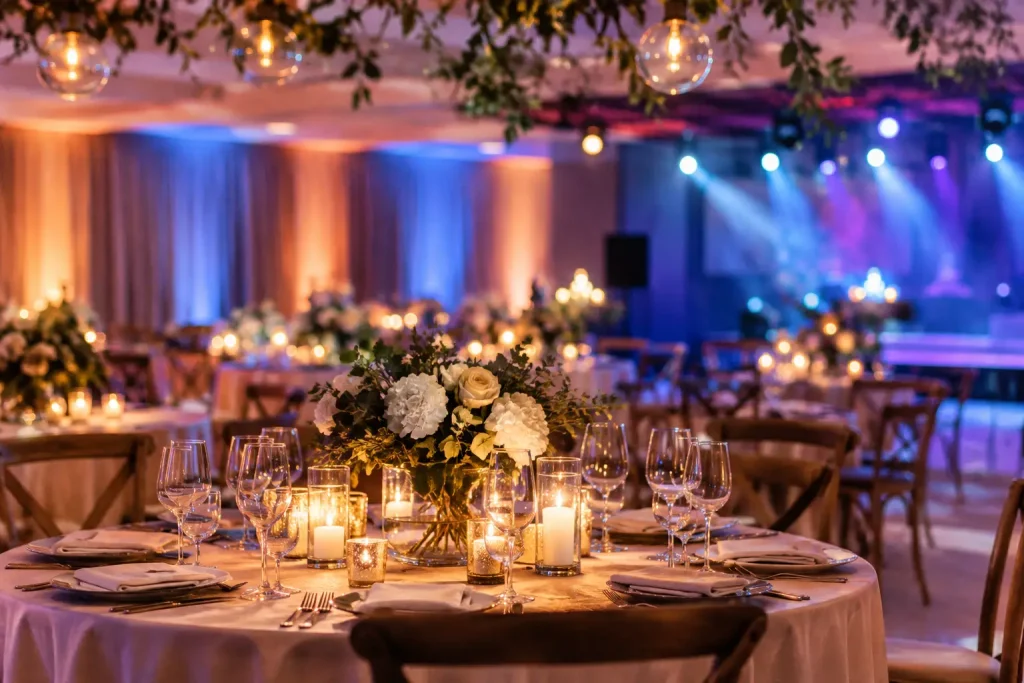
Festoon lights are a favourite for relaxed celebrations because their larger globes create a friendly, festive look. They work particularly well strung across a backyard, under a marquee ceiling or along an outdoor dining area. Their soft pools of light make large spaces feel more connected.
The trade-off is that festoon lighting is more decorative than precise. It should be supported by practical lighting near walkways, catering stations and amenities. Keep the lines tidy and positioned high enough that guests and staff can move freely underneath.
2. Use fairy lights for an intimate finish
Fairy lights give weddings, engagement parties and milestone birthdays a delicate glow. Wrapped around marquee poles, draped through ceiling linings or used to frame a welcome sign, they add detail without taking over the styling.
Warm white is generally the most versatile choice. It complements timber furniture, white linen, greenery and most colour palettes, while cooler white can look sharp in modern corporate settings. Use fairy lights in a few concentrated places rather than everywhere. A single canopy effect over dining tables has more impact than scattered strands with no clear purpose.
3. Make a feature of the dance floor
When the music begins, guests should know exactly where the energy is. A well-lit dance floor creates that invitation. Coloured party lights, moving effects or a light-up dance floor can give the evening a genuine shift in pace after dinner and speeches.
This is one area where the event type matters. A 21st birthday may suit colour, movement and a higher-energy look. For a formal wedding, keep the dancing light lively but avoid effects that compete with the photographer or make the room feel like a nightclub before the party has properly started. Position any effects so they do not shine directly into guests’ eyes or across the head table.
4. Add uplighting to shape the room
Uplights sit at floor level and project colour or warm light upwards across marquee walls, draping, columns, trees or architectural features. They are one of the simplest ways to make a plain room feel styled and to carry a chosen colour through the venue.
For corporate events, uplighting can reflect brand colours around the room without relying on large printed signage. At weddings, soft amber, blush or warm white creates depth and photographs beautifully. Deep blue, purple and saturated colours can make a strong statement, but they may affect how skin tones and table settings appear in photographs. Always test the colour in the actual space where possible.
5. Light the tables, not just the ceiling
Guests spend a large part of the event seated, talking and eating. Table lighting therefore deserves more attention than it often gets. Candles, LED table lamps and lantern-style centrepieces bring the light down to guest level and create a more relaxed dining experience.
Flameless LED options are a practical choice in marquees, venues with strict safety policies and family events. They provide the ambience of candlelight without open-flame concerns. If using real candles, check venue requirements, allow clear space around them and keep flammable styling materials well away.
6. Turn the entrance into a moment
The arrival experience sets expectations before guests reach the bar. Light a pathway with lanterns or bollard-style markers, frame a sign with fairy lights, or use uplighting to draw attention to a landscaped entry. This is especially useful for evening events held at private homes, parks or larger venues where guests may be unsure where to go.
The entry also needs to be functional. Make sure uneven ground, steps and changes in level are clearly visible. Decorative lighting can look beautiful, but it should never leave guests searching for the path in the dark.
7. Use lighting to define outdoor zones
Outdoor events often spread naturally across a property, which can feel generous or disjointed depending on the setup. Lighting helps create distinct areas for dining, drinks, lounging and games. A cluster of festoon lights can define the bar, while lanterns or subtle uplights make a lounge area feel intentional.
Avoid trying to illuminate the whole backyard at the same brightness. Let the edges fall away slightly and focus light where people are meant to gather. This creates atmosphere while keeping the event easier to manage after dark.
8. Highlight trees, greenery and marquee walls
Sydney gardens offer plenty of natural styling, particularly for weddings and summer parties. Uplighting a feature tree or washing light across hedges adds depth behind photographs and gives guests something to look at beyond the table settings.
Inside a marquee, light can add texture to plain walls and ceiling linings. A soft wash makes the structure feel more polished, while coloured uplighting can transform it between formal dining and late-night dancing. Keep cables managed neatly around the perimeter and away from busy guest areas.
9. Keep the bar brighter than the lounge
The bar needs enough visibility for staff to serve safely, guests to read drink options and everyone to see what is being poured. That does not mean harsh lighting. A warm overhead treatment paired with subtle bar-front illumination can make the area inviting and efficient.
Lounge seating can be dimmer and softer. Ottomans, cocktail furniture and wine barrels look their best when the surrounding light is warm rather than clinical. The contrast between a practical bar and a low-lit lounge gives the event a natural rhythm.
10. Plan for speeches and photography
A beautiful dim room can become frustrating when nobody can see the speaker or the photographer cannot capture key moments. Arrange a dedicated, flattering light source for speeches, cake cutting and formal announcements. Warm, even front lighting is usually more useful than a bright spotlight from directly above.
Speak with your photographer or videographer before finalising the plan. They can flag issues such as coloured lighting on faces, distracting shadows or a backdrop that will photograph too dark. The goal is not to flood the room with light, but to ensure important moments are visible and worth remembering.
11. Choose safe power and weather-ready equipment
Outdoor and marquee lighting must be planned around power access, weather and cable safety. Use equipment suited to the conditions, keep connections protected from moisture and avoid running leads across main walkways. If cables must cross an access point, they should be properly covered and secured.
It is also wise to consider timing. A winter event may need lighting from late afternoon, while a summer celebration may not need its full scheme until much later. Hiring a complete package through one supplier can make coordination easier, particularly when marquees, furniture, heating, dance floors and lighting all need to work together. Marquee Event Hire can help bring those essential elements into one practical event setup.
12. Build lighting in layers, then edit
The strongest lighting plans usually have three layers: general light for safety, feature light for personality and task light where people need to see clearly. Start with the first layer, add the second around focal points, then check whether the final result still feels balanced.
More is not always better. Too many competing colours, hanging features and flashing effects can make a carefully styled event feel cluttered. Choose one hero treatment, such as a fairy-light canopy or festoon-lit courtyard, and let the remaining lighting support it.
Great lighting should make guests feel comfortable before they consciously notice it. Plan it around how people will arrive, mingle, dine and celebrate, and your event will keep its atmosphere long after the last song.