

Party Hire Tips
Marquee Delivery Access for Stress-Free Events
Aug
A beautiful marquee starts with practical marquee delivery access. Before the flooring, tables, lighting and styling can transform your backyard, venue or park space, the hire equipment needs a safe, workable path from the delivery vehicle to the setup area. A few early checks can prevent delays on the day and help your event get off to the right start.
For weddings, corporate functions, birthdays and community celebrations, access is not an afterthought. It affects the size of marquee that can be delivered, the equipment that can be included, the time required for installation and, in some cases, the suitability of the site itself.
Why marquee delivery access matters
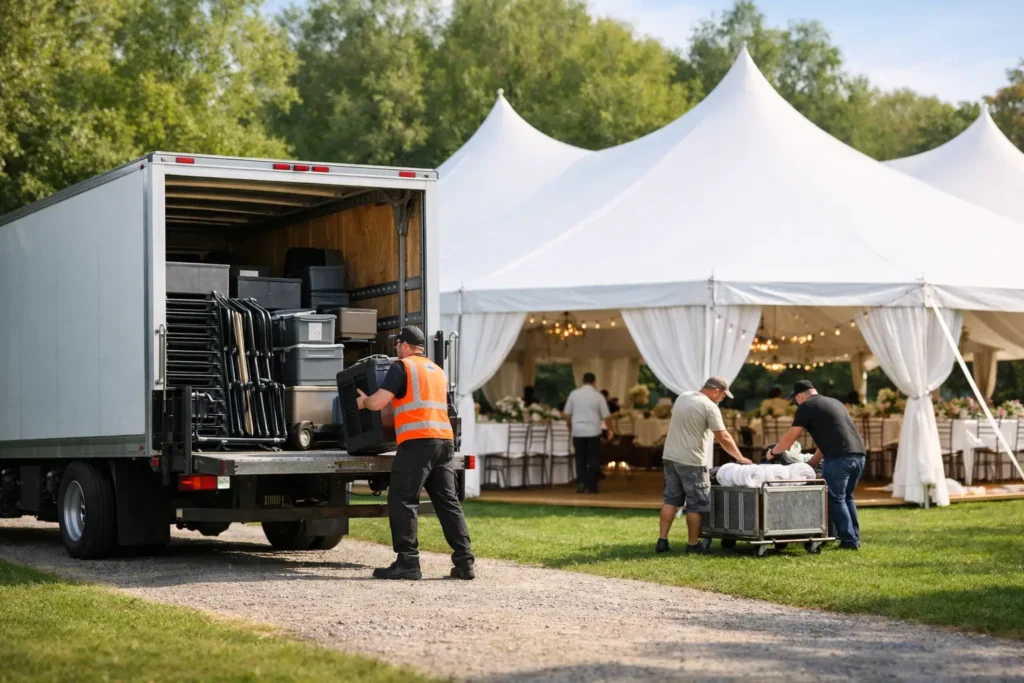
Marquee equipment is substantial. Frames, roof sections, walls, weights, flooring, furniture and event equipment are transported in purpose-built vehicles and moved by an experienced crew. Even a modest backyard marquee can involve multiple items that are awkward or heavy to carry by hand.
A clear route lets the crew work efficiently and safely. It also protects your property, avoids unnecessary disruption to neighbours or venue operations, and gives your setup the time it deserves. Where access is restricted, the team may need to allow extra labour, use smaller loads or adjust the equipment plan.
This does not mean a difficult site cannot host a memorable event. Sydney has plenty of terraces, narrow side entries, sloping blocks and venues with loading restrictions. It simply means access details should be discussed before finalising your hire package, rather than discovered when the truck arrives.
Check your marquee delivery access before booking
Start by tracing the route the delivery crew will take. Think beyond the front gate. The relevant path begins where the vehicle can legally and safely stop, then continues through gates, driveways, side passages, lifts, corridors or garden paths to the final marquee position.
Measure narrow points rather than estimating them. Gate openings, side access, steps, tight turns and low overhead clearances can all change what is possible. Overhanging branches, clotheslines, air-conditioning units and outdoor furniture may look minor on a site visit but can obstruct large marquee components or trolleys.
Parking is equally important. Delivery vehicles need a nearby place to unload without blocking traffic, driveways, emergency access or a busy venue entrance. In inner-city streets, apartment precincts and commercial locations, parking restrictions or loading-zone rules may apply. If permits, concierge approval or a specific delivery window are required, organise these well before the event date.
At private homes, consider whether the driveway is suitable for a loaded vehicle. Steep gradients, soft ground, sharp turns and low branches can create limitations. It is often safer for the vehicle to unload from the street, provided there is suitable parking and a clear path to the event area.
The details to share with your hire team
Accurate information helps the crew prepare the right approach. When requesting a quote or confirming your booking, let the team know about:
- the nearest available parking area and approximate distance to the setup site
- gate widths, side passages, stairs, slopes and uneven ground
- low branches, powerlines, balconies or other overhead obstacles
- apartment, venue or council delivery rules, including booked loading times
- any access changes on the day, such as locked gates, building works or guest vehicles.
Photos are particularly useful. A wide photo from the street, followed by photos of each gate, path and the intended marquee location, gives a much clearer picture than a brief description. For larger events, a site inspection may be the best way to confirm practical requirements before equipment is allocated.
Gates, paths and stairs: the small things that cause big delays
The most common access issue is a gate that is narrower than expected. A pedestrian gate may be fine for chairs and linen, but not for large frame sections, bar furniture, dance floor panels or a sizeable quantity of tables. Removing a temporary gate panel or clearing items from a side path can sometimes make a major difference, but this needs to be arranged in advance.
Stairs require special attention. A few broad steps close to the setup area may be manageable for selected equipment, while a long stairway, multiple flights or a steep, narrow route can significantly increase handling time. This is especially relevant for rooftop functions, raised gardens and homes with a rear entertaining area below street level.
Ground conditions matter too. Wet grass, loose gravel, muddy paths and steep lawns can make moving equipment slower and less safe. If rain is forecast, consider how the route will hold up under foot traffic and whether a protected access path is available. The marquee itself may provide shelter for your guests, but the crew still needs a safe way to deliver and install it.
Plan vehicle access around your event schedule
Delivery and collection are part of the event timeline, not separate errands. Allow enough time before caterers, florists, entertainers and guests arrive. A marquee installation should not be squeezed into the same short window as every other supplier, particularly where the venue has limited loading access.
For a backyard celebration, it is worth moving cars from the driveway and keeping the front of the property clear at the agreed delivery time. For a corporate or venue-based event, nominate one contact person who can meet the crew, provide access and answer site questions. That person should have authority to arrange gates, lifts, security clearance or loading-zone entry if needed.
Collection needs planning as well. Equipment cannot always be removed immediately after a late-night event, and the site should be left accessible at the agreed collection time. Avoid stacking rubbish, gifts, furniture or décor in front of marquee exits and access routes. If other suppliers are packing down at the same time, establish an order so vehicles and crews are not competing for the same narrow space.
Do not forget the setup footprint
Good access gets the equipment to site, but the final location must also suit the marquee. Measure the usable area, including room for legs, anchors or weights, entry points and any required walls. Allow practical space around the structure for guests, catering, service staff and emergency movement.
Consider what sits below and above the marquee position. Underground services, irrigation, paving, retaining walls and pool surrounds may affect anchoring options. Overhead powerlines and branches can limit height and placement. A level lawn is ideal for many occasions, yet paved courtyards, hardstand areas and uneven ground can also work with the right marquee style, flooring and weighting plan.
It is also worth thinking about how the rest of your hire items will arrive at their final positions. A bar at the far end of the yard, a dance floor beneath the marquee, heaters near the walls and dining furniture across a large site all require enough room for safe installation. Choosing one supplier for the marquee, furniture, lighting and party essentials can make that coordination far more straightforward.
When access is limited
Restricted access does not automatically rule out a marquee. It may mean selecting a configuration that suits the route and site, reducing the amount of bulky equipment, allowing more installation time or arranging additional handling. Each property is different, and a solution that works beautifully for a small courtyard may not suit a large formal wedding.
Be upfront about limitations from the beginning. It is far easier to tailor an event layout before invitations are sent than to alter plans during delivery. With more than 25 years of event experience, Marquee Event Hire can help customers consider the practical side of a celebration alongside the look and atmosphere they want to create.
A clear driveway, an unlocked gate and a measured path may not sound like the glamorous part of event planning. Yet they give your marquee crew the best chance to build the welcoming, polished space your guests will remember long after the party ends.