Party Hire Tips
Safe Jumping Castle Surfaces for Sydney Parties
Oct
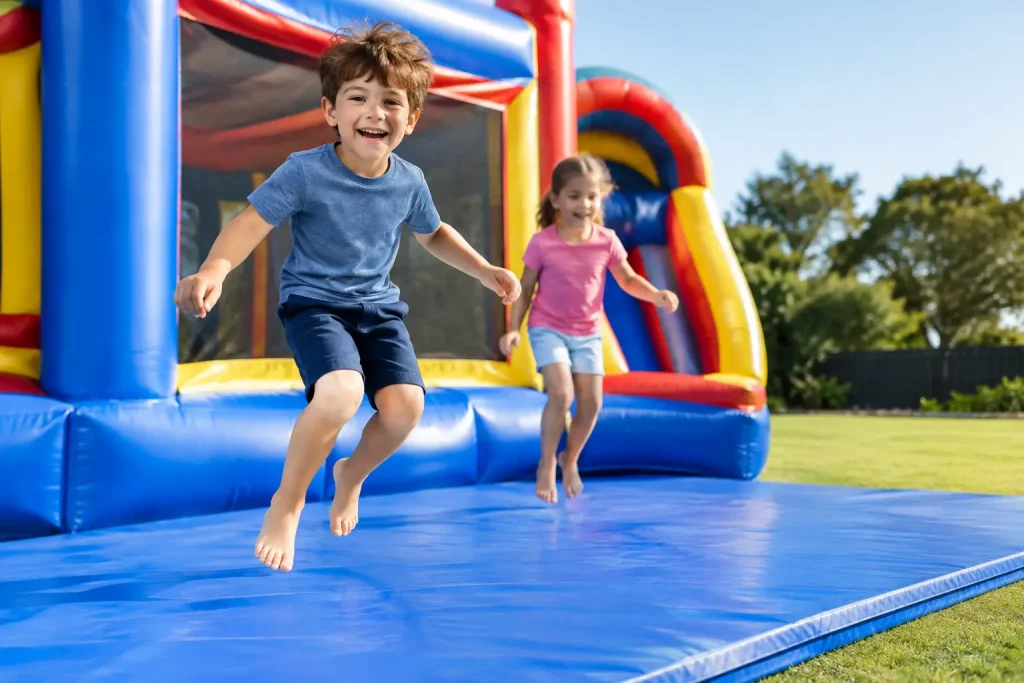
A jumping castle can quickly become the centre of a birthday party, school fete or family celebration. But before choosing colours, themes or extra party hire items, there is one practical detail that shapes the whole setup: jumping castle surfaces. The right site helps keep the inflatable stable, protects the equipment and gives children a safer place to play.
For Sydney hosts, the answer is rarely as simple as ‘put it on the lawn’. Backyards, venues and community spaces can have slopes, soft patches, paving joins, overhead branches and access limitations. A quick site check before booking can prevent stressful changes on event day.
What makes a suitable jumping castle surface?
A suitable surface is level, clear, firm enough for the inflatable and accessible for the delivery team. It also needs enough open space around the jumping castle for safe entry, anchoring and supervision. The ground directly under the castle matters, but so does the area surrounding it.
Start by measuring the available footprint rather than estimating from memory. Include room for the blower, entry ramp and a clear boundary around the unit. Keep the area away from pools, ponds, garden edges, glass doors, steep drops, driveways in use and any location where children could run into other event equipment.
The surface must be checked on the actual event day as well. Overnight rain, a freshly watered lawn or a change in venue layout can alter what is suitable. If conditions differ from the original plan, speak with the hire provider before the castle is installed.
Grass is often ideal – with a few checks
A flat, healthy lawn is often the preferred option for a jumping castle. It provides a more forgiving area around the inflatable than hard paving, allows suitable anchoring in many circumstances and suits the relaxed feel of children’s parties.
That said, not every lawn is ready to go. Long grass can hide holes, sprinkler heads, rocks, sticks and pet waste. Very soft or waterlogged ground may not provide a secure base, while dry, compacted lawns can require a different anchoring approach. Slopes are another concern. Even a gentle-looking incline can affect how the inflatable sits and how children move inside it.
Before delivery, mow if needed, remove toys and outdoor furniture, and check for irrigation lines or underground services. Avoid placing the castle beneath low tree branches or where falling leaves, fruit or twigs may collect on the inflatable. If rain is expected, have a realistic wet-weather plan rather than assuming the lawn will recover in time.
Can a jumping castle go on concrete or paving?
Concrete, asphalt and paving can be suitable for some jumping castle setups, but they need more planning than grass. The hard surface should be clean, level and free of sharp objects, loose gravel, broken pavers, drain grates and significant cracks. The surrounding area needs particular attention because children will be getting on and off the castle throughout the day.
Hard surfaces generally require a suitable alternative anchoring method. This is not a place for improvised weights, household furniture or tying the castle to a fence. A professional hire provider will determine whether the site, equipment and anchoring arrangement meet the requirements for safe operation.
Paving can also become hot during a Sydney summer afternoon. The inflatable material, entry step and nearby ground can be uncomfortable for bare feet. Where possible, choose a shaded position without placing the castle directly under branches, and schedule active play earlier in the day. Ask children to wear socks if appropriate for the conditions and keep water available nearby.
Indoor and undercover jumping castle surfaces
Indoor venues can be an excellent choice when weather is unpredictable, especially for school halls, function rooms and larger private spaces. A clean, flat floor can offer a controlled environment, but ceiling height is the first non-negotiable check. Measure from floor to the lowest obstruction, including beams, lights, fans, sprinklers and hanging decorations.
The room also needs enough width and clearance around the unit, with a safe route for delivery. Doors, corridors and lifts can limit which castle can be brought inside. A castle that fits the hall on paper may still be unsuitable if it cannot be transported through the building safely.
Timber, vinyl and polished concrete floors should be protected as required, and venue management may have specific rules around floor coverings, power access, noise and emergency exits. Never position a blower or extension lead where it creates a trip hazard. Cables should be managed carefully and kept away from children and catering traffic.
Surfaces to avoid or assess carefully
Some sites need a different party activity, a smaller inflatable or a revised layout. A responsible setup is always more valuable than forcing a castle into a tight or unsuitable space.
Be especially cautious with the following conditions:
- uneven ground, holes, exposed roots or sharp landscaping materials
- steep slopes, loose soil, mud or standing water
- gravel, rocks, sand with hidden debris or rough construction areas
- balconies, decks, rooftops or raised platforms unless specifically approved for the equipment and site
- locations beneath powerlines, low branches, roof edges or overhead structures
- cramped areas near pools, roads, gates, glass, barbecues or heavy event traffic.
Artificial turf can sometimes work well because it is usually level and tidy, but it still needs assessment. The key question is whether the castle can be secured correctly and whether the turf and sub-base are in good condition. Do not assume that a neat-looking surface is automatically suitable.
Site access matters as much as the ground
A perfect lawn at the back of the property is only useful if the delivery team can reach it. Let the hire company know about narrow side access, stairs, tight gates, long distances from parking, apartment lifts or shared driveways when requesting a quote. This helps determine the right equipment and avoids delays on the day.
Power access is another essential part of the plan. Jumping castles need a reliable power source for the blower, with the outlet located at a practical distance. Avoid relying on a power point inside a busy kitchen or running leads across paths, gates and dance floor areas. If the event is in a park or open space, discuss power options and any council or venue requirements well before the celebration.
For larger events, it is worth mapping the full site. Position marquees, tables, catering stations and seating so adult guests can still move comfortably while the children’s zone remains visible and separate from hot food, glassware and service areas. A thoughtful layout lets everyone enjoy the occasion without competing for the same patch of ground.
Keep the play area safe throughout the event
The safest setup can still become chaotic without supervision. Nominate an adult to keep an eye on the jumping castle, particularly when children of different ages are attending. Set simple rules before play begins: no shoes, food, drinks, sharp objects, rough play or overcrowding. Children should be grouped by size where possible, and the castle should not be used in unsafe weather conditions.
Wind deserves special attention. If weather changes, follow the hire provider’s instructions immediately. Turning off the blower, allowing extra children in or moving the inflatable after installation are not sensible workarounds. The person supervising should know how to contact the provider and should keep the entry clear at all times.
A little preparation gives children the freedom to bounce, laugh and burn off birthday-cake energy while the adults relax. When you choose the right surface and share clear site information early, your jumping castle becomes a joyful part of the celebration rather than a last-minute logistics problem.