

Party Hire Tips
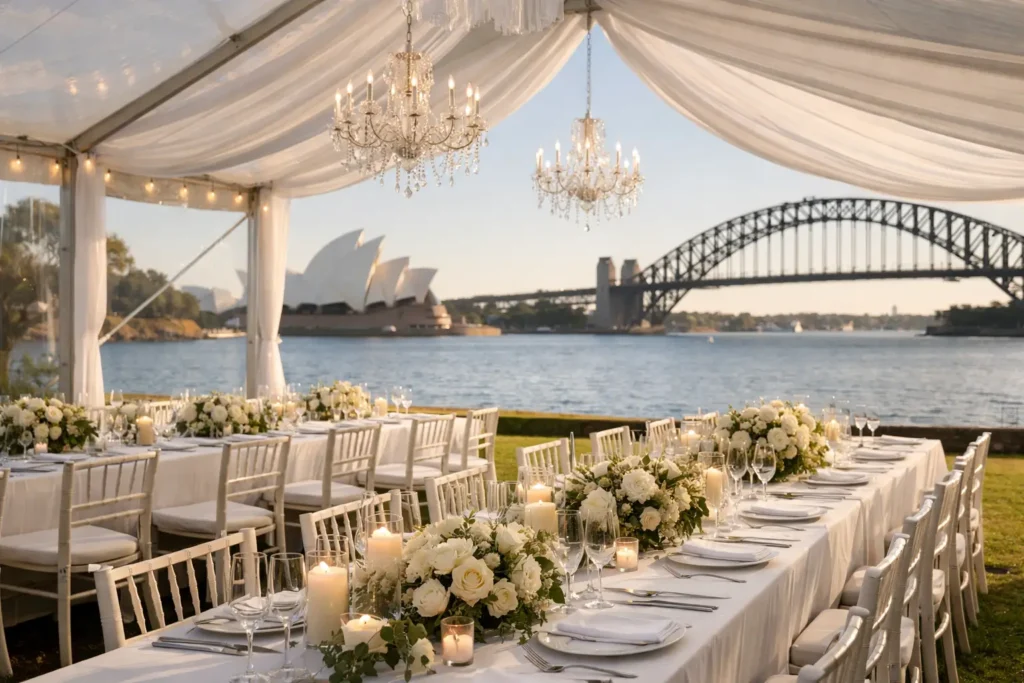
Wedding Marquee Setup Example for Sydney Couples
Jul
A great wedding marquee setup example is not simply a tent, tables and a few fairy lights. It is a carefully planned temporary venue that gives every guest room to arrive, celebrate, eat, dance and relax – whatever the Sydney weather decides to do. The best result feels effortless on the day because the practical decisions were made well before the first chair was placed.
Consider this example: a 100-guest wedding reception held in the garden of a family home or private property. The couple want a polished but welcoming celebration, with a sit-down meal, bar service, dance floor and enough cover for a wet-weather ceremony plan. Their marquee becomes the centre of the event, while the surrounding lawn and garden create the atmosphere.
Wedding marquee setup example: a 100-guest reception
For this guest count, a 10 m x 20 m marquee is a useful starting point for a seated reception with a dance floor and service areas. Exact sizing depends on the table shape, catering style, whether the bar sits inside the marquee, and how much space is needed for a band or DJ. A smaller structure can work for dinner alone, but a crowded room quickly loses the relaxed feeling couples are trying to create.
In this example, the marquee is positioned with its entrance facing the garden path, so guests have a clear arrival point. A short run of bollards or wine barrels can define that entrance without making the setting feel overly formal. The sidewalls remain open during warm weather, allowing guests to enjoy the view and breeze, with clear walls or solid sidewalls ready if rain or wind arrives.
Inside, ten round tables each seat ten guests. Round tables encourage conversation and give the room a softer, more celebratory look than long rows of trestles. Leave generous aisles between each table, particularly along the route from the entrance to the bar and amenities. It is a small detail that makes a real difference once guests are carrying drinks, staff are serving meals, and grandparents need easy access to their seats.
The dance floor sits at one end of the marquee, rather than being squeezed into the middle. This keeps the dining area calm during speeches and creates a natural shift in energy once the formalities are over. A DJ table or band setup can sit beside the dance floor, with speakers planned early so power leads can be safely positioned away from guest walkways.
The layout in practice
At the opposite end, a bar with bar tables and stools gives guests a place to gather before dinner and during dancing. Keeping the bar away from the dance floor reduces congestion and lets staff restock more easily. If the property has a kitchen or catering tent nearby, allow a direct access path behind the marquee for catering staff rather than sending them through the guest area.
The bridal table is placed where the couple can see the room, usually centred along a long marquee side or at the far end facing the guests. It should have a clear backdrop for photographs, whether that is floral styling, drape, festoon lighting or the natural garden beyond a clear wall. Avoid putting it directly in front of a service entrance or beside speakers.
A simple floor plan can include the following zones without feeling overfilled: guest dining in the centre, the bridal table at one end, dance floor and entertainment at the other, plus a bar zone near an open side. The space between these areas is what allows the reception to flow. A marquee should feel generous, not like every square metre has been sold to the highest bidder.
Build the wedding marquee from the ground up
The ground beneath the marquee matters as much as the structure overhead. A level lawn is ideal, but many Sydney properties have slopes, garden beds, uneven pavers or limited access. A site inspection helps identify whether the marquee needs a levelled floor, weighted installation, careful placement around landscaping, or a different configuration altogether.
For a formal wedding, flooring is often worth considering. A solid floor gives dining furniture a stable base, keeps heels from sinking into soft grass and makes the room feel more like a purpose-built venue. It is especially valuable after rain or in areas where morning dew could leave the lawn damp. For a more relaxed garden wedding, a dance floor with carefully placed matting at entrances may be enough.
Access also needs a practical conversation. Can a ute, delivery vehicle or installation crew reach the backyard? Is there a narrow side passage, stairs, a pool fence or overhead powerlines to work around? These details affect installation time and what equipment is appropriate. They are far easier to resolve during planning than on the morning of the wedding.
Plan for Sydney weather, not just the forecast
Sydney weddings can bring a bright afternoon, a cool evening and a sudden shower in the space of a few hours. The right marquee setup gives you options rather than forcing a last-minute scramble.
Sidewalls are one of the most useful additions to a wedding package. They can be opened for airflow during the day, then closed as the temperature drops. Clear walls preserve garden views while providing protection from wind and rain. Solid walls can offer more privacy and help reduce drafts, although they may make the marquee feel more enclosed on a warm afternoon.
Heating should be based on the season, event timing and the number of open sides. A winter wedding or an evening reception with clear walls may need heaters positioned around the perimeter. For summer, airflow is the priority. Open walls, well-spaced tables and fans can make a substantial difference. A full marquee does create warmth from guests, but relying on that alone is not a comfort plan.
Wet-weather planning should cover the journey as well as the reception. Think about how guests move from their cars to the ceremony, ceremony to drinks, and drinks to dinner. Covered walkways, umbrellas and a protected entrance can save dresses, suits and moods when the weather turns.
Furniture and styling that make the room feel intentional
Once the marquee size and layout are settled, furniture gives the wedding its personality. White folding chairs create a clean, classic look for both ceremony and reception. Timber chairs, cross-back chairs or upholstered options can make the setting warmer and more formal. The choice should suit the couple’s style, but it must also be comfortable enough for a long dinner and speeches.
Table linen changes the look of a marquee quickly. Crisp white linen is timeless, while neutral tones, coloured napkins or textured runners can bring in the wedding palette without overwhelming the space. Consider the view from every angle: guests notice chair backs, table legs, the bar front and what sits behind the bridal table in photographs.
Lighting deserves more than an afterthought. Festoon lights create a lively garden-party atmosphere, while fairy lights can soften the marquee roof and add sparkle after sunset. Practical lighting is equally essential at the bar, catering area, paths and toilets. Guests should be able to read a menu, find their seat and walk safely without relying on mobile torches.
For a wedding with children, a small activity corner with kids’ furniture can keep younger guests entertained without taking over the reception. For a more adult-focused event, lounge furniture and ottomans beside the bar offer a quieter place for relatives and friends to catch up away from the dance floor.
The hire details couples often miss
A beautiful setup can still be frustrating if basic event operations are overlooked. Power is a key example. Catering equipment, bar refrigeration, lighting, sound, heaters and entertainment can place significant demands on a home’s electrical supply. Confirm requirements with every supplier early, and arrange suitable power equipment if needed.
Toilets, rubbish collection, catering access and parking are equally important. A private property may look like the perfect wedding setting, but it does not automatically have the capacity of an established venue. Your marquee provider and event suppliers should understand the site plan, bump-in times and responsibilities for pack-down.
It is also wise to allow time between marquee installation and the wedding. Setting up a day or two before the event gives stylists, florists, caterers and furniture teams room to work without competing for access. It also gives the couple time to walk through the layout and make small adjustments before guests arrive.
Marquee Event Hire has spent more than 25 years helping Sydney hosts build occasions from the structure up, with the furniture, lighting, flooring and practical extras needed to make the plan work as a whole. The strongest wedding setups are rarely the most complicated. They are the ones that give people shelter, comfort and a beautiful reason to stay a little longer.