
Party Hire Tips
Winter Party Heating Guide for Sydney Events
Sep
A clear winter party heating guide can be the difference between guests staying for dessert and quietly heading home early. Sydney winters are generally mild, but evening temperatures, wind and damp ground can make an outdoor birthday, wedding or corporate function feel far colder than the forecast suggests. The answer is not simply hiring more heaters. It is creating a warm zone where people naturally gather, while keeping access, catering and safety front of mind.
For a backyard celebration under a marquee, a school fundraiser or a polished client event, heating should be planned alongside the marquee layout, furniture and lighting. Once the room is built and guests arrive in winter layers, moving equipment around becomes difficult. A little thought before delivery makes the whole occasion more comfortable and far less stressful.
A winter party heating guide starts with the space
Start with the event footprint, not the guest number alone. Fifty people standing around a bar need a different heating approach to fifty guests seated at long tables for a three-course meal. A compact, enclosed marquee retains warmth much better than an open-sided structure, while a large, high-roof marquee with regular foot traffic needs more considered heater placement.
Look at where cold air will enter. Open doorways, gaps between marquee walls, exposed lawn and a breezy side of the property all affect the temperature guests actually feel. If your site is likely to catch wind, adding marquee walls is often just as valuable as adding another heater. Walls reduce drafts and help retain the warmth you are paying for, particularly around dining areas.
Ceiling height matters too. Heat rises, so a tall marquee can feel chilly at guest level even when the equipment is working hard. In this setting, position heaters thoughtfully around occupied zones rather than relying on one source at the edge of the structure. Your marquee supplier can help match the layout to the style and scale of the event.
Create warm zones, not hot corners
The best winter setups give guests several comfortable places to settle. Focus first on seated dining, lounge settings, cocktail tables and the bar queue. These are the areas where people pause long enough to notice the cold. A heater placed only near the entrance may feel welcoming on arrival, but it will do little for guests enjoying a meal 10 metres away.
Avoid clustering every heater in one location. One overly warm corner leaves the rest of the marquee cold and can make guests reluctant to move around. Spread warmth across the room while keeping clear pathways to exits, catering stations and toilets.
Consider the rhythm of the party as well. A dance floor creates its own energy once music starts, but older guests, parents with young children and people seated for long periods will appreciate a warmer nearby lounge or dining area. For weddings and corporate dinners, this is often what keeps the room feeling inviting after sunset.
Choose the right type of event heater
The right heater depends on whether your gathering is outdoors, under a well-ventilated marquee or in an enclosed temporary space. Heating equipment is not interchangeable, and safety requirements must guide every decision.
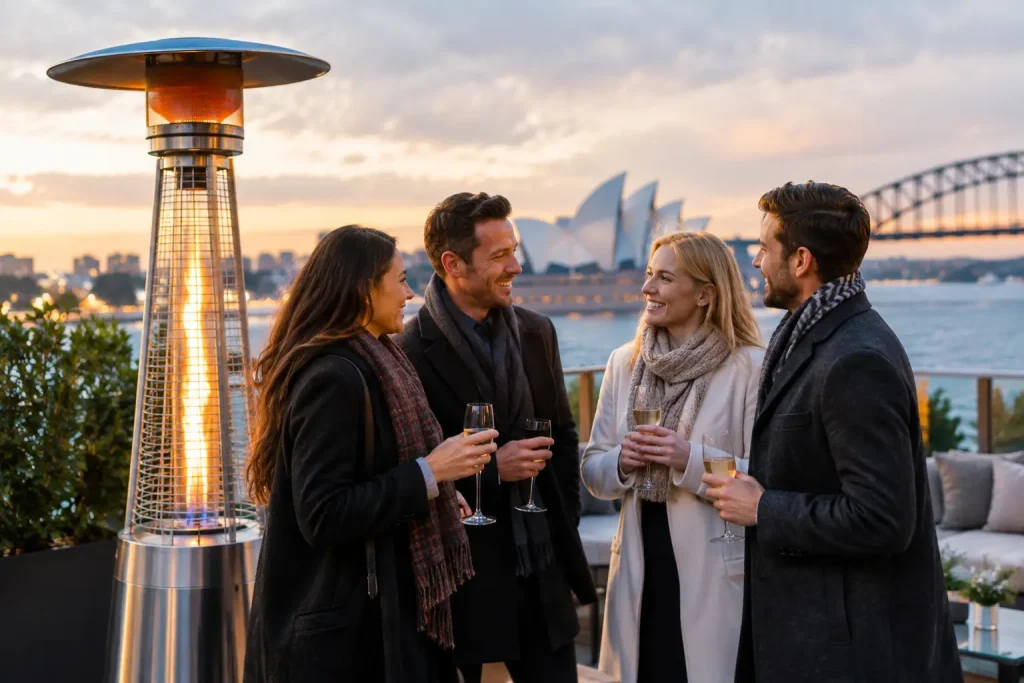
Outdoor gas patio heaters are a familiar choice for open courtyards, decks and the edges of an outdoor event. They provide localised radiant warmth and suit standing groups well. Their limitation is exposure: strong wind can reduce their effectiveness, and they are not the best solution for warming a whole large area.
Electric heaters can be useful where safe power access is available and the event layout calls for targeted heat. They are often suited to smaller covered areas, but their output, power requirements and cable placement need to be assessed before the day. Cables should never become a trip hazard across guest walkways, and power demand should be considered alongside catering equipment, lighting, music and any entertainment.
For larger marquee events, specialised temporary heating may be a better fit than a collection of small units. This can provide more consistent warmth across a defined space, but it requires early planning around access, ventilation, fuel or power, and equipment positioning. It is especially worth discussing for winter weddings, formal dinners and corporate functions where guests will be seated for several hours.
Do not choose a heater solely because it appears powerful. Fuel type, ventilation needs, clearance requirements and the conditions of your site all matter. Never use outdoor gas heaters inside a fully enclosed marquee or building unless the equipment is specifically designed and approved for that environment. Follow the hire provider’s operating instructions, keep children away from hot surfaces and ensure heaters are supervised throughout the event.
Make the marquee work harder for you
A marquee gives winter events a major advantage: you can create a protected room rather than asking guests to brave the elements. The structure, walls and entry points should be considered as one heating system.
If rain is possible, choose flooring that keeps guests off wet or cold ground. Even a well-heated marquee feels less comfortable when shoes and chair legs are sinking into damp grass. A firm floor also makes the space easier to furnish with tables, chairs, bars and lounge pieces, and gives heaters a stable, appropriate position.
Marquee walls are particularly useful once the sun goes down. Clear walls can preserve a garden view while reducing exposure, while solid walls offer greater protection where privacy or wind blocking is the priority. It depends on your site and the atmosphere you want. A cocktail event might retain an open side near the bar for flow, while a sit-down dinner may benefit from a more enclosed arrangement.
Plan an entrance rather than leaving a wide opening facing the prevailing breeze. A practical entry point helps retain heat without making guests feel shut in. It also gives you a natural place for umbrellas, welcome signage or a staffed check-in table.
Furniture and styling add real comfort
Heating is the foundation, but furniture changes how warm an event feels. Lounge seating encourages guests to gather in warmer zones instead of standing around the perimeter. Table linen softens the look of a winter dining setting and makes the room feel more considered, while warm lighting creates visual comfort even before guests feel the heat.
Choose lighting that flatters the space without competing with heating equipment or creating obstructions. Festoon lights, fairy lights and carefully placed lamps can make a marquee feel celebratory after dark. Keep every heater clearly visible, with the manufacturer-recommended clearance around it free of drapes, linen, decorations and furniture.
For an outdoor party, a few well-positioned wine barrels, bar tables and ottomans can create social pockets close to the heat. The goal is practical as much as stylish: guests should have somewhere to put a drink, sit down and enjoy the evening without crowding around a single heater.
Plan for the weather you may actually get
Check the forecast in the week before your event, then plan for a cooler and windier version of it. A 16-degree daytime forecast does not tell you how an exposed backyard will feel at 9 pm. If the event begins in the afternoon, remember that the heating requirement changes quickly after sunset.
Wet weather plans should cover more than rain. Confirm how equipment will be delivered across the site, where water will drain and whether the ground is suitable for a marquee, flooring and heating setup. Keep heaters clear of puddles and protect electrical connections from moisture. If access is tight, tell your hire provider early so the delivery and collection process can be organised properly.
It is also smart to give guests a gentle cue about the conditions. A note that the celebration is outdoors or under a marquee lets them bring an extra layer without taking anything away from the occasion. For evening weddings, a basket of wraps near the lounge area can be a thoughtful finishing touch.
Build your hire package early
Winter dates can involve more moving parts than summer celebrations, particularly when you need a marquee, walls, flooring, furniture, lighting and heating together. Booking early gives you more choice and allows time to assess the site properly. It also avoids the common mistake of treating heating as a last-minute add-on after the marquee layout has already been fixed.
At Marquee Event Hire, the advantage of arranging your setup through one experienced hire partner is that the practical pieces can be considered together. Your marquee size, walls, dining layout, bar position, dance floor, lighting and heating all influence one another. That makes it easier to create an event that looks polished and works comfortably from the first arrival to the final farewell.
A winter party does not need to feel like a compromise. With shelter from the wind, sensible heater selection and spaces designed for guests to relax, the cool night can become part of the charm. Plan warmth into the event from the beginning, and your guests will remember the celebration, not the temperature.